
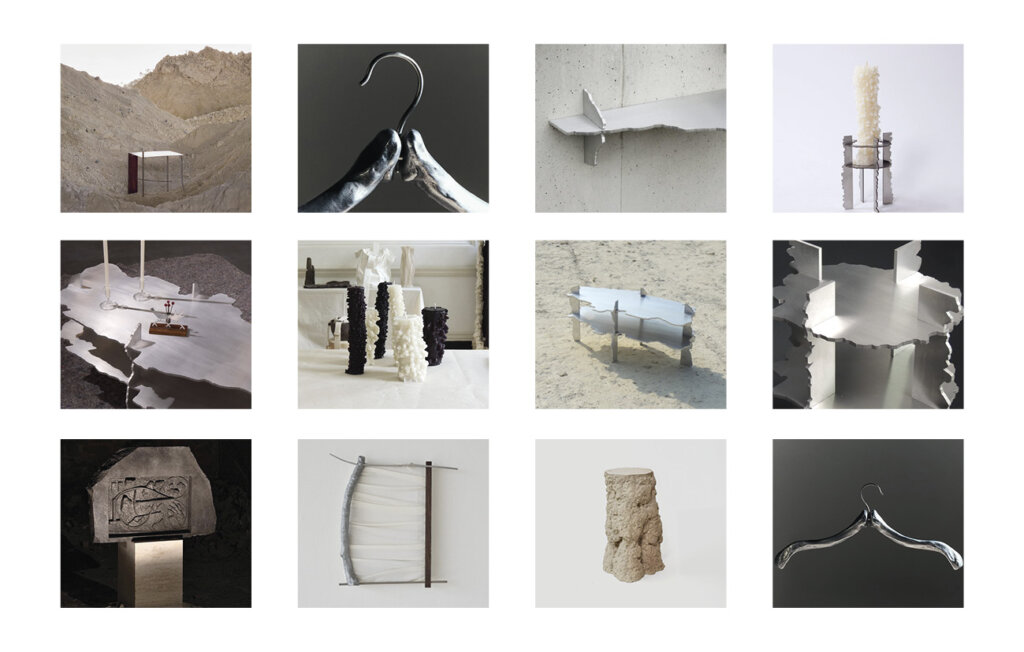
In our first Coqueteo, which means something along the lines of banter, flirtatious and glamorous conversation, we sat down with British product designer and artist, Louis Benjamin Barrett. Irregular shapes punctuate his work, akin to a Casuarina Cunninghamiana tree you might come across in Mexico or rocks from the Sahara el Beyda. Knowledgeable and handy in an array of materials and 3D scanning, Louis’ work comes to form a strong plethora of organically alluring objects.
After meeting Louis at a gallery opening in Mayfair, we knew we had to learn more about the product designer and be among the first to get the scoop. Dashing and charming, looks Italian or Spanish (but is not), clad in his military-like dark wool jacket, we all initially found common ground around our favorite shots from Lily Gavin’s opening exhibition.
Any Coquetas’ guest gets to decide their drink of choice and perhaps a CD to be played during our conversation. Louis went for some Korean corn silk tea and chose the only CD that had an interesting packaging: a compilation of breakbeat/jungle-y tracks published by Fabric, stored in its all-metal box.
C: Coquetas need a background check. Let’s start with some facts.
LB: Okay, so my name is Louis Benjamin Barrett. My date of birth is the 29th of April, 1999. I think my first pet was called Lottie. She’s still around. She’s a dog.
C: Still?
LB: She’s still around.
C: What?
LB: You know what, actually before her I had some hamsters, but I can’t remember what they were called.
C: How old were you when you had Lottie?
LB: She’s like 17 or something.
C: Crazy. But, let’s continue with the other basics, could you tell us more about how you got into product design and what your early iterations looked like?
LB: I studied product design at Central Saint Martins, but back then I was more focused on electronics. It was only after graduating I realised that wasn’t for me because it’s really constricted and I think there are not many opportunities to develop your creative expression. On the other side, object design is more flexible and gives you more freedom.
C: We noticed the organic quality of your work. Were you always pulled toward organic shapes or did that come later in your practice?
LB: In terms of inspiration, I’ve always loved nature. I grew up around it from an early age, I was always kind of out, and I had a knife with which I used to whittle like sticks into some shapes. I’ve always been interested in that but it got lost when I went to uni.
C: In your current practice, you use materials like stainless steel and digital tools such as 3D modelling and renderings. Do you think that interest stems from your initial fascination with technology, or did it emerge over time?
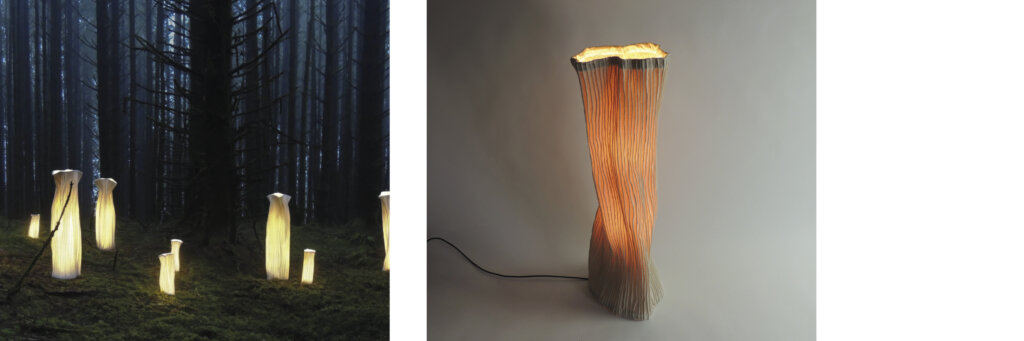
LB: In some ways, yeah. I think materiality is a bit different. I’ve always loved metal, aluminium and stainless steel, especially. But it’s probably mostly due to my appreciation for classical design. I don’t think that’s come from my education. But then saying that, I think the electronic part has definitely played into my lighting pieces. So that’s enabled me to kind of solve things myself. Although it’s not the hardest skill.
C: Are there any artists or designers that you admire for their use of materials or just more generally as a source of inspiration?
LB: Max Lamb is amazing. He’s a contemporary furniture designer. He’s got this core design kind of aesthetic, but he’s worked with every kind of material under the sun, which is quite amazing. I guess he’s someone I look up to in that way.
C: That’s kind of what you do as well.
LB: (laughs) Not quite. No, I’m not at that level. He’s very established.
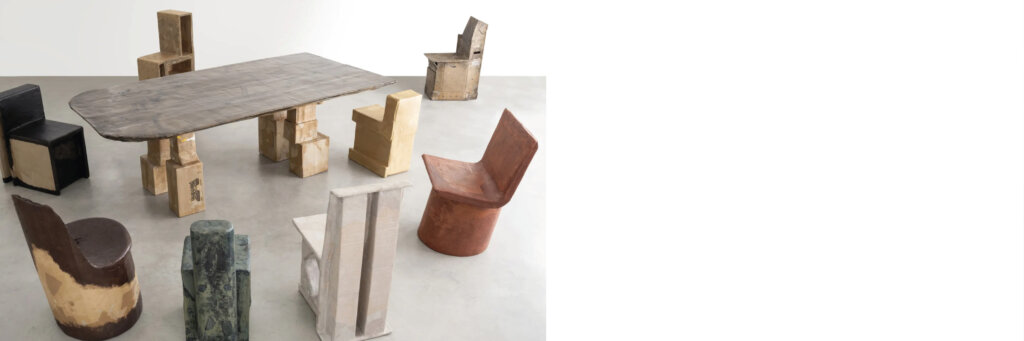
C: We saw that you spent some time in Mexico for a workshop. Can you tell us more about that experience and what you discovered from working with different producers, designers, and craftspeople?
LB: My friend Luigi Penza, who’s an artist and, of course, Italian, kindly asked me to come along with him to a residency in Mexico, where the family runs a marble workshop. Samael – who’s now my friend – his family have been running the business for a long time in Guadalajara. We had a week over there where we could do essentially whatever we wished with the stone. For that residency, I produced a set of two side tables, and that experience gave me an opportunity to work with stone which I had never really done before.
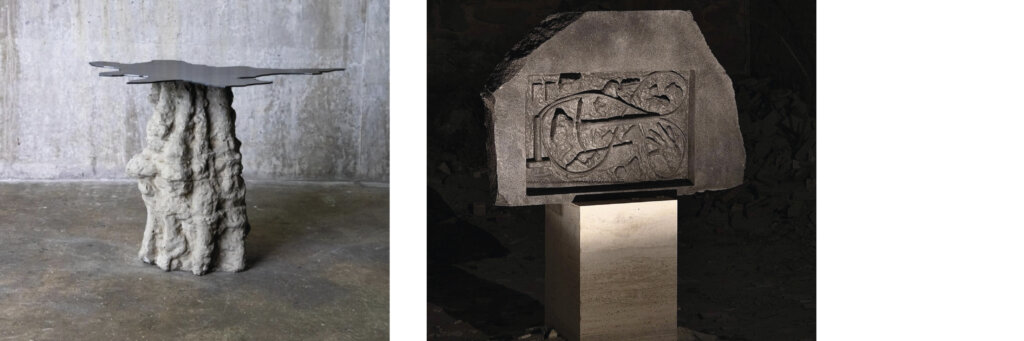
I also got to collaborate with Luigi, which was really nice. I think a lot of my works focused around 3D scanning textures and objects – as is Luigi’s – so we kind of combined that and reached the final piece. It was such an amazing opportunity to work with the local craftspeople. It’s such an amazing place and the family was so welcoming. And we created this sculpture of about three meters high, two meters wide out of recinto, a Mexican volcanic stone. It took maybe around 24 to 32 hours to CNC cut the shape out of it.
C: And is that when you also worked on a side table that was inspired by a ceiba tree that you saw in Mexico? Was that during the same trip?
LB: Yes, that was the same trip. All across Mexico, I was amazed by the wildlife and the variety of plants. There was a ceiba tree which really caught my attention because it had these quite large spikes all over it. I then thought: I need to 3D scan this and do something with it.
C: How do you precisely 3D scan a tree?
LB: So I’ve got an app on my phone – Polycam – which is what I use primarily. It’s quite well known. It’s obviously not as good as like handheld 3D scanners, but it does the job when you’re out and about.
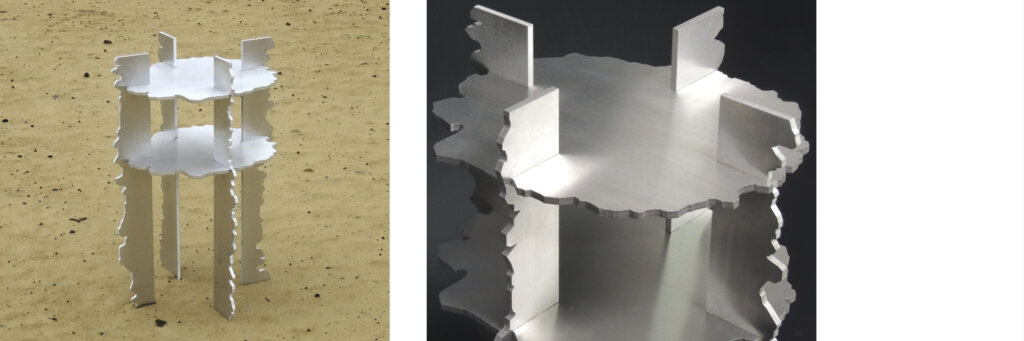
C: Is that where your work mostly starts from? By being drawn to something in nature and then scanning it?
LB: Mainly, yeah. I think the majority of my pieces have 3D scan elements, but not always. I’ve also done some textural pieces which are more inspired by natural textures rather than taken directly from scans.
C: It’s interesting how you’ve been inspired and done work in so many different types of environments, like Central America, then Sub-Saharan Africa, and also in a northern environment like in a forest in the UK. And you also have a strong range in various materials. Is there one that stands out the most for you?
LB: Aluminium for sure. More specifically, cast aluminium. I’ve worked with it in the past but I’ve only really started implementing it into my designs over the past year. In a lot of my early designs, I was kind of translating aluminium into linear forms, so like just laser cut, and being able to cast directly from these natural organic forms is really beautiful to me. I think aluminium is the best material to do that.
C: Fabulous. Switching to questions about collaborations with artists and installations, can you tell us more about the piece you did with Guy Haddon Grant at Kearsey & Gold? How do these collaborations influence the way you approach your own work as you’re more traditionally product design trained.
LB: Guy’s a sculptor. He’s amazing. I was asked to do a piece that frames the sculpture – like a backing. The start for that came from a Dover Street Market installation I did where I used these textures. The gallery saw what i had done there and were interested in something with a similar materiality but draped.
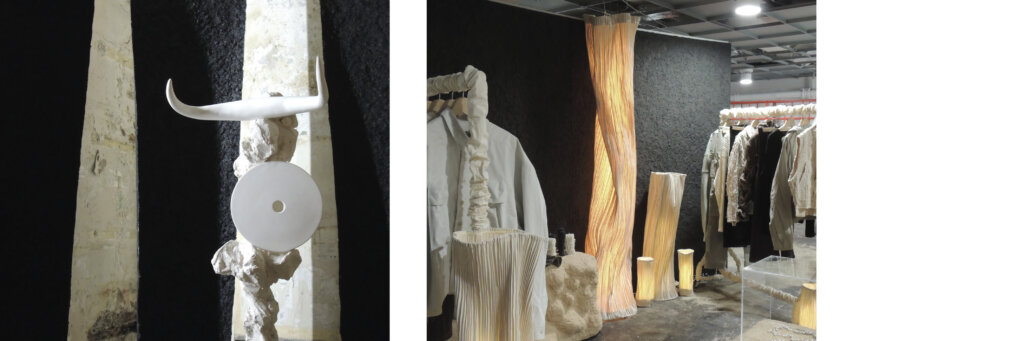
C: Does collaborating with artists prompt you to approach your work in a different way?
LB: Good question. I think it allows me to be a bit more loose and free. When you look at things in a classic product design lens, there’s obviously an element of functionality. Especially with tables, chairs, everything has to be functional to some extent. Whereas, when it comes to art it doesn’t have to be functional at all. You know it just has to look a certain way so I think you can kind of completely strip that functionality and then it becomes a more freeing experience in a way.
C: Do you enjoy that lack of importance of functionality?
LB: Yeah, I do like that. With a table, for example, there’s a lot more freedom because you just have to rest objects on it, it has to be stable. But with a chair, there’s a lot more considerations and chairs are a lot more complex. I think there are a lot of designers these days that are making chairs under that same realm of “artistic design” or like “collectible design” but they’re not functional although they look cool.
C: That’s interesting because in fashion you can be into couture and you’re basically just making art pieces or you can do ready to wear or something that’s more wearable for sure same thing in furniture design.
LB: Yeah, 100%.
C: What do you think about the chair trend and how obsessed people can get with them. Do you feel that way?
LB: Right now, I think people love chairs. Chairs are the thing. People are like, “Oh, I’m going to buy a really nice chair, and I don’t care if anyone sits on it, but I’m going to have a really nice chair.” Well, that’s key as well. Sometimes they don’t even use them. So it’s kind of crazy, but I can understand it if it’s a real art piece.
C: It could also just be a sculpture.
LB: It’s true. Which then kind of goes against what I said earlier. If you want it to be a sculpture, it doesn’t have to be functional.
C: And do you have a lot of your furniture at your place? Or, where do you keep it?
LB: I’ve got a lot of my place, to be honest, too much. I used to have a shared studio space, so I would store there. Whereas now, they’re all a bit scattered between my place and elsewhere. I’ve also loaned tables out to friends, so some of them are looking after my tables, like kids, they’re kind of looking after my little babies.
C: Do you have something that you’re really into? You know, right now, for me, I’m obsessed with shoes. Do you have the same thing, but with like furniture, you know, like, “Oh, I’m obsessed with coffee tables right now. All I do is think about a coffee table.”
LB: I think chairs to be honest. Yeah, chairs, I love chairs.
C: What’s your favourite chair as of right now, or today?
LB: That’s a really hard question. I really love the shell chair produced by Hans Wegner. In a way, the shape is really quite beautiful. And pretty iconic. It’s a beautiful chair.
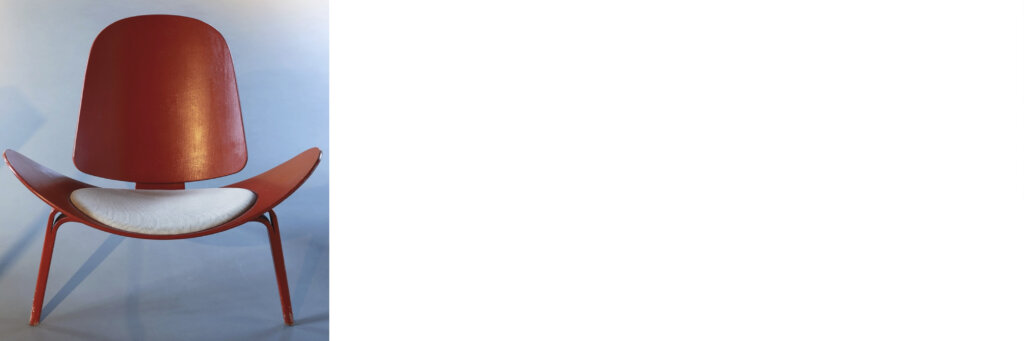
C: So that’s your favourite?
LB: Potentially.
C: Interesting. And, How do you feel about a chaise lounge?
LB: I love it. I love a chaise lounge. I think LC4 by Le Corbusier might be one of my favourite chairs.
C: And what’s a trend you’re hating in furniture? Or it could be a designer or it could be a trend. Because, you know, Coquetas is not just about fluff, it’s about criticism too.
LB: I’d say resin. I’ve worked with fiberglass in the past, I kind of regret it. I mean – it’s what I had at that time. I think we need to do better, to be honest. There are a lot of designs which use pure resin, when they could use other materials like glass or bio resin. They’re not perfect, but they’re better alternatives. Obviously there are levels to it, like metal isn’t always sustainable and wood’s generally sustainable but I think resin is a pretty horrible substance.
C: I don’t know if I’ve seen what resin designs are like? Or maybe just the very trendy ones?
*Louis then proceeds to show us a horrible resin filled table.*
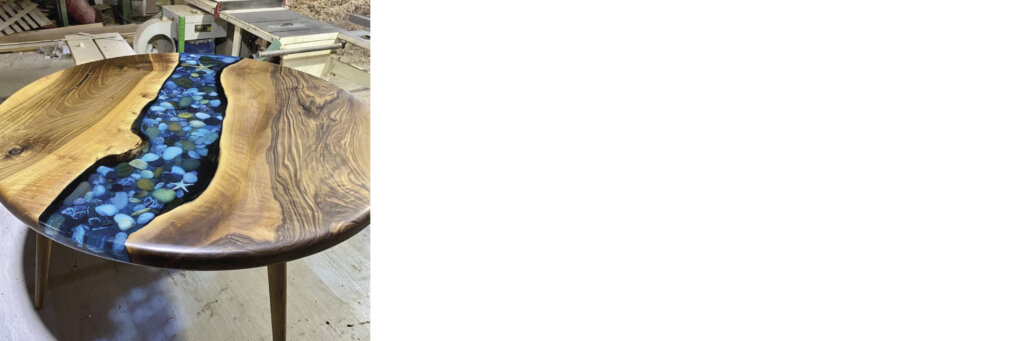
C: That cannot be.
LB: Yeah, people make their own resin tables. They might have a wooden table where they got cracks and they’ll fill a giant hole.
C: Oh yeah, that’s horrible. And so, how would you fix that?
LB: That’s a good question. I don’t know. I wouldn’t go about it that way.
Coquetas are still waiting for a better answer concerning the matter. Louis, email us once you know.
C: Let’s look ahead now. What would be something ideal for your career in the future?
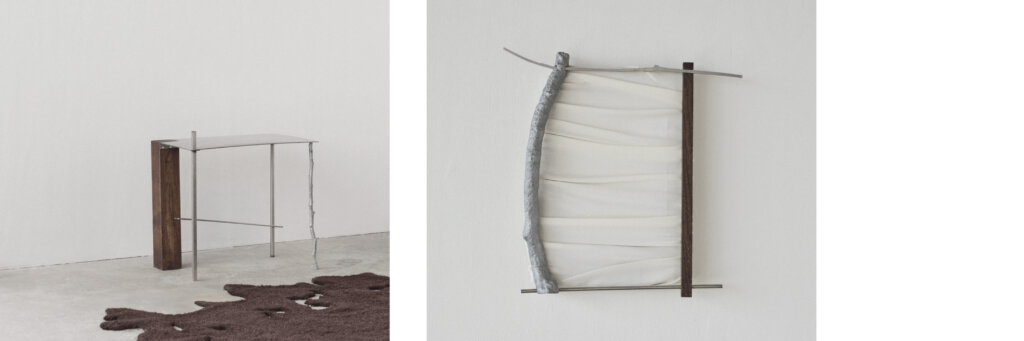
LB: The dream for me would be to have an architect ask me to create a collection of furniture for their parituclar space. I’ve just done a collection in New York for a collaboration with Ashley Law. That experience was so great in getting to develop multiple pieces at once under the same aesthetic.
C: That would be cool. So like have your own little studio or what?
LB: 100%, yeah.
C: Would you want to have it here in London?
LB: Undecided. It depends where life takes me at this point. I’m open to anything and everything.
C: What about a dream collaboation? Like a specific architect or an interior designer.
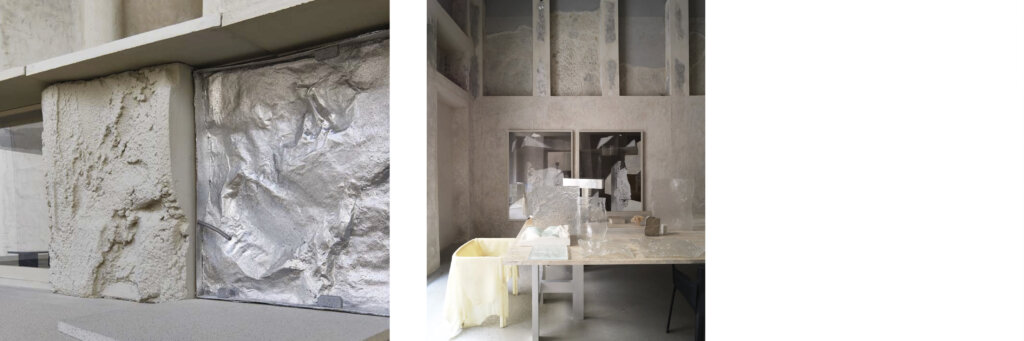
LB: I love Anne Holtrop. He’s an architect based in Bahrain. He makes beautiful textured pieces and he does his own furniture as well. Maybe in the future.
C: Maybe you’ll become his apprentice, his disciple. And is there like another way that you do your research, as in do you have other sources of inspiration? Like through film or music?
LB: I look back to classical design obviously. I think film is really inspiring but I don’t think I’ve watched enough films and I’m trying to get better.
C: Let’s play a game. We’re sitting in our living room, what’s an item that you would burn and one that you would copy?
LB: Okay, okay, I can’t lie, I’d probably burn the sofa… no shame. I think the sofa’s not the worst, but you could have something more like loungy. (They’re expensive.) Yeah, so burn the couch. And for copy, I actually really like these chairs. They’re kind of cool. I don’t know, there’s something about the dining table I love as well, like that kind of storage underneath, so I think I’d copy something to do with that. (Yeah, it’s practical.)
C: We should get to the juicy part. You should tell us a secret. Each one of our Coqueteos will end with a secret, you have the honour of starting.
LB: Wow, okay. Let me think.
*In all fairness we didn’t tell him in advance we’d be asking for a secret. After going through 3 or 4 different stories, Louis decided to settle on the following.*
LB: In New York, when I was exhibiting, this older lady came up to me and she read some conversation about my work and within five, ten minutes, we started speaking about going upstate New York. She was like “I’ve got a house upstate, I’d love for you to stay there” and I was like “You’re joking” and she was like “No, no, you can stay there” and then it turns out she was being truthful. We drove up and she had a 100 acre estate up in the upper state of New York. There was a forest, three lakes and wild deer. We drove up there, we stayed for three nights, for free, in this random lady’s house. (What was she doing? Like what was her profession?) She was just a nice lady. Her husband made money in the flowers industry. Tulips, specifically. (Wow. All right, cool. How far from the city?) Like upstate. It was in the Catskill Mountains.
Besitos and bisous, C